
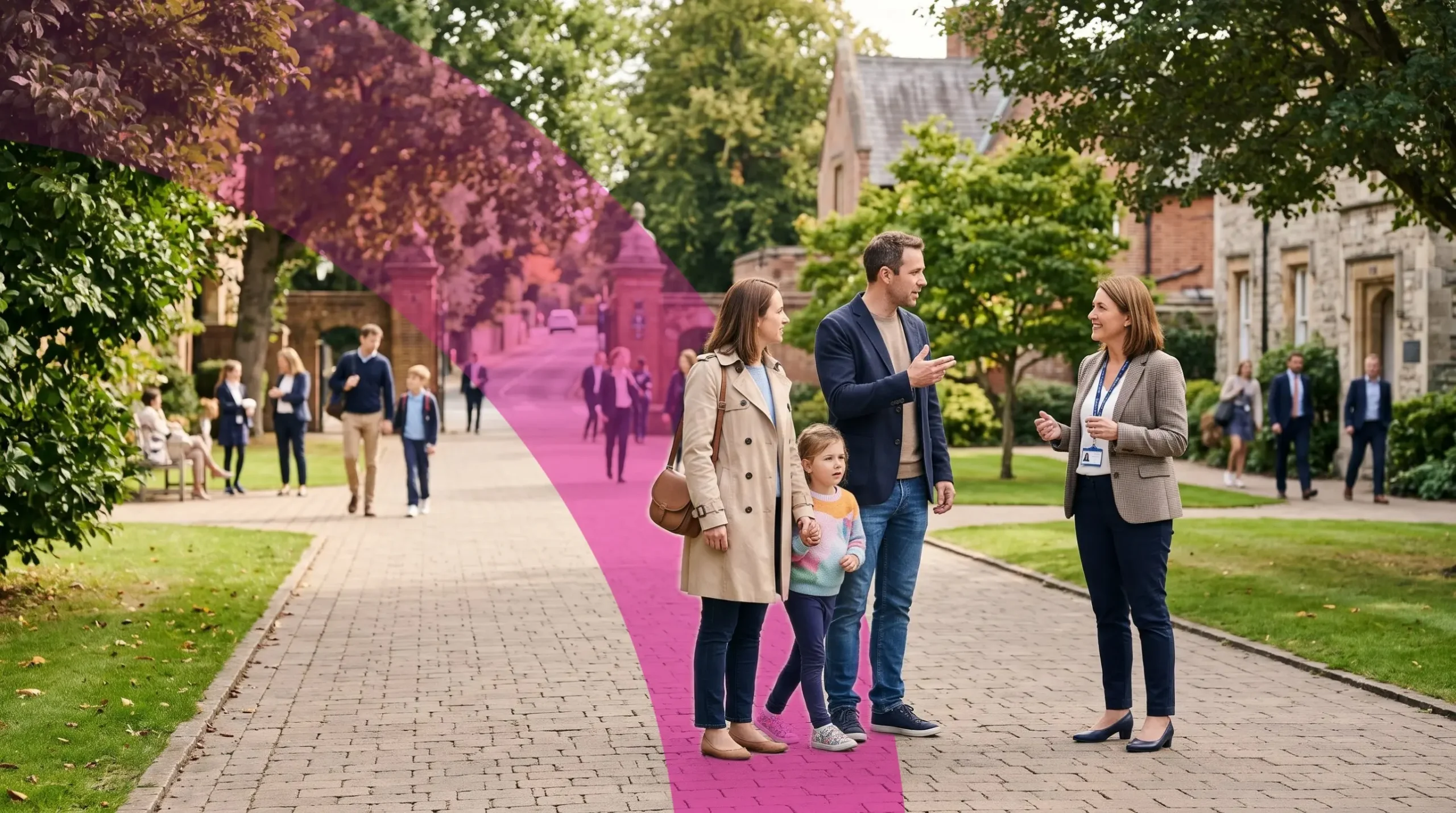
Every application form asks for a home address. Most families have answered a harder question before they reach that field… how would our child actually get there, every day, for years?
If the answer is, “I don’t know”, many never fill in the form. Some don’t even enquire. The application stops at the journey, and the school never knows it was in the running.
This article looks at where that happens, why it matters most for younger children, and what a school can do about it.
Most families don’t start with a list of the best schools. They start with the schools they could realistically get to, and choose from those.
That radius is set by the journey, not the distance on a map. A school 20 minutes away by car is out of reach if nobody at home has a car free at 8am. A school further away is back in play if a bus stops at the end of the road.
The evidence
#1 factor
Location was the leading factor for UK parents choosing a prep school.
Research on school choice in other systems has found the same pattern: how far families can travel shapes which schools they consider in the first place.
Source: Schoolsmith survey of 986 UK parents, February 2026.
The evidence points the same way. In the UK, a February 2026 Schoolsmith survey of 986 parents found location was the leading factor in choosing a prep school. Research on school choice in other systems has found the same pattern: how far families can travel shapes which schools they consider in the first place.
For an admissions team, that changes where the competition is. You aren’t only competing with the school with the better results. You’re competing with the school families can get to.
The journey weighs heaviest when children are young. An older student might take a train or cycle. A six-year-old can’t travel alone, so every journey depends on an adult.
That puts the school run on parents/carers, twice a day, every day. For a family with two working parents, it can decide the whole choice. Add a sibling at a different school and the logistics get harder still.
A school bus changes that calculation. It turns “we can’t do drop-off” into “we can”. For parents of young children, it comes with a second question: will I know my child got on? Parents who can see where the bus is, and get a message when their child boards, don’t have to take it on trust. It’s the same visibility your safeguarding team needs, and the questions a parent asks are the ones your office should be able to answer straight away.
The younger years are also where long relationships with families start. A family that joins at five may stay for a decade or more, often with siblings following. If the journey rules you out at the start, you lose more than one place. [Link to blog 5 once live: The Families You Keep]
Stage 1
Shortlisting
The family checks whether your school is reachable before they enquire. If your transport page doesn’t show a way to get there, you may never hear from them.
Stage 2
The open day
The family visits, likes what they see, and asks how their child would get in each morning. A vague answer here undoes a good visit.
Stage 3
After-school life
Families picture the whole day, not just the start and end. If a child can stay for sport or music but has no way home afterwards, the offer feels smaller. Schools that make one-off and late trips easy to book take that worry away.
Stage 4
Accepting the offer
This is when a family plans the daily routine in detail. It’s also when they compare it against the school down the road that’s an easy drive.
Stage 5
Moving house
Families who move within the area often reconsider their school. A route that still reaches them is a reason to stay.
At every one of these points, a clear answer about transport keeps the conversation going.
A school can’t move. Its reputation takes years to shift. But how far its routes reach can change from one year to the next.
That makes transport one of the few admissions levers a school controls directly. A new stop can bring a whole village within reach. A late run can make clubs and sport work for families who live further out.
The hard part is knowing where to add a route before the families are there to fill it. Fund it too early and it runs half-empty. Wait too long and the families choose somewhere else. That’s transport’s chicken-and-egg problem [link to blog 3], and the next post in this series looks at how to break it.
A good place to start is simply asking. At Sutton Valence School, the Bursar invites families in areas the routes don’t yet serve to get in touch, and the school uses those requests to gauge demand for new routes.
In the UK
30,000 fewer pupils
in independent schools since VAT was added to school fees.
When every place counts, families you can’t reach are families you can’t recruit.
Source: Independent Schools Council (ISC).
Vectare helps schools give families a clear answer at each of those moments. Families find their nearest stop on your route map, see the times, and book a seat themselves. Late runs and one-off trips go through the same app, within the rules your school sets.
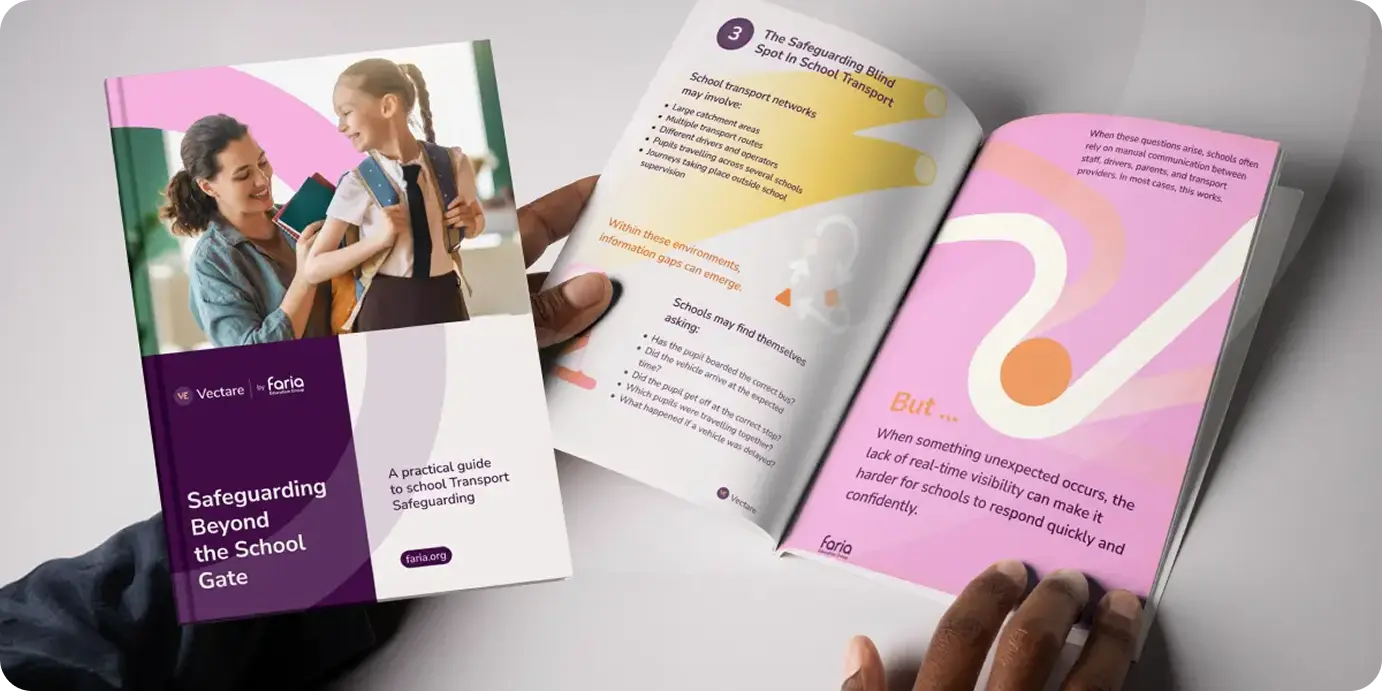
Once a child is travelling, parents see where the bus is and get a message when their child boards. That visibility matters to a family deciding on a school, and it keeps safeguarding going beyond the school gate once they’ve joined.
It all runs on a phone on the bus, with no boxes or engineers.
Book a demo to see how Vectare could work for your routes.